.webp)








Alchemy Factory is a crafting and production-management simulation where you transform raw materials into increasingly complex alchemical products. While early gameplay feels simple — combine ingredients, produce items, sell for profit — long-term success depends on automation layout, resource flow optimization, recipe prioritization, and economic scaling.
This guide follows your progression chronologically, from manual crafting to advanced production chains and full factory efficiency.
1. Understanding the Core Production Loop
At its foundation, Alchemy Factory operates on a closed economic cycle:
Gather resources → Craft components → Combine recipes → Sell products → Reinvest profit.
Early Game Focus
In the beginning:
- Production is manual.
- Resource gathering is limited.
- Profit margins are small.
Your objective is not rapid expansion — it is stability.
Establish a Stable Income Base
Prioritize:
- Simple recipes
- Fast crafting time
- Reliable resource availability
Avoid complex chains before securing consistent revenue.
2. Smart Resource Gathering Strategy
Raw materials determine scalability.
Identify High-Yield Resources
Early resources often vary in:
- Spawn rate
- Regeneration speed
- Recipe demand frequency
Track which materials are used in multiple recipes.
Avoid Resource Over-Collection
Stockpiling excessive raw materials slows liquidity. Convert materials into saleable goods quickly to maintain capital flow.
3. Efficient Recipe Prioritization
Not all recipes are equal.
Evaluate Recipe Efficiency
Measure:
- Crafting time
- Ingredient cost
- Sale price
- Demand rate
Focus on recipes with:
- Moderate complexity
- High turnover
- Stable profit margin
Build Tiered Crafting Chains
Structure production:
- Tier 1: Basic components
- Tier 2: Refined mixtures
- Tier 3: High-value potions
Avoid skipping tiers prematurely.
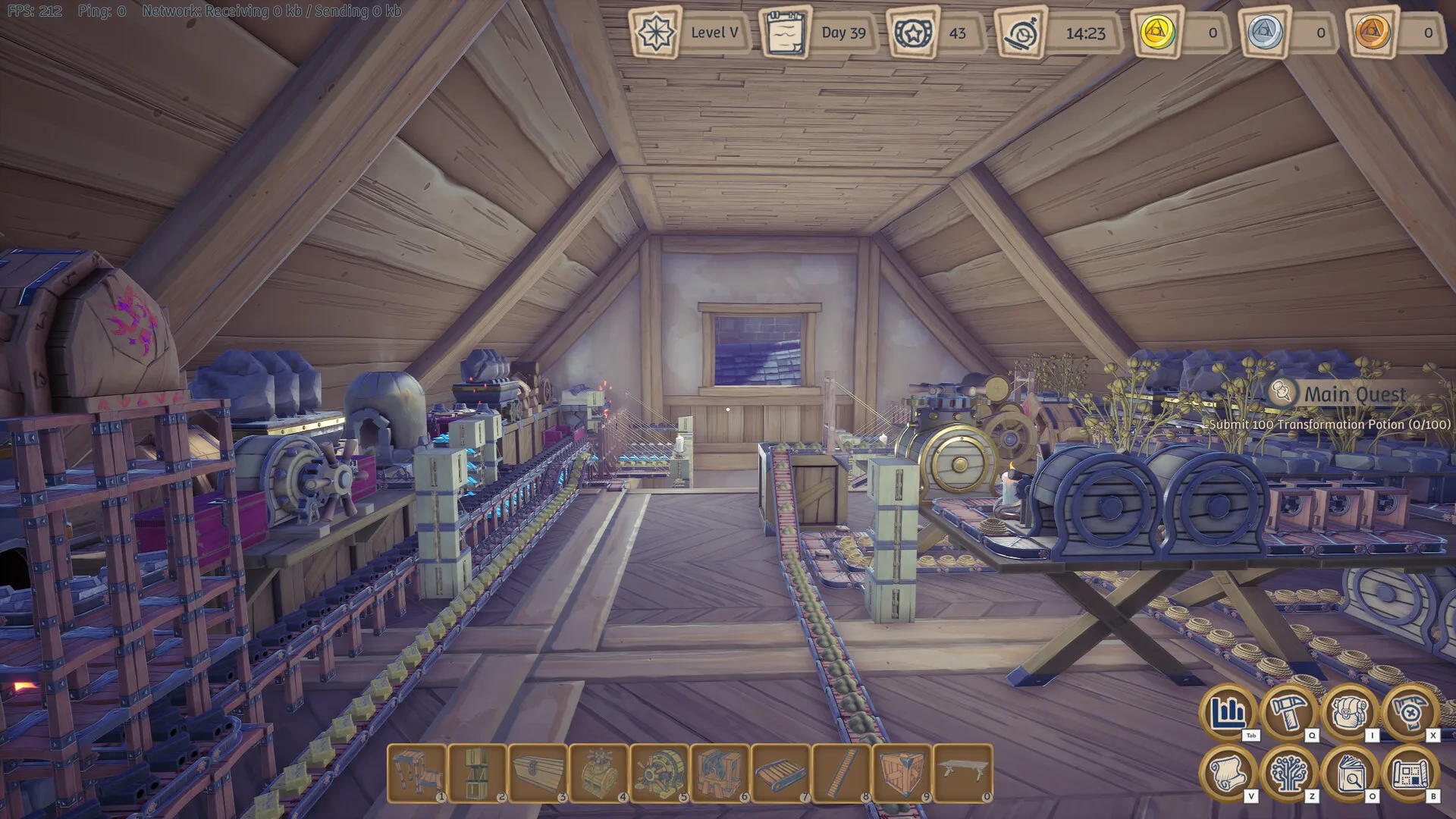
4. Factory Layout Optimization
As automation unlocks, layout becomes critical.
Flow-Based Layout
Organize machines:
Input → Processing → Assembly → Storage → Shipping
Minimize:
- Cross-traffic
- Idle machines
- Long transport routes
Modular Expansion
Build in sections rather than random placement.
Example:
- Left wing: Basic ingredients
- Center: Refinement
- Right wing: Final assembly
Modular design simplifies scaling.

5. Automation Timing Strategy
Automation improves efficiency but increases infrastructure cost.
When to Automate
Automate once:
- Manual crafting becomes bottleneck
- Profit per minute stabilizes
- You have capital reserve
Premature automation reduces liquidity.
Balance Manual and Automated Systems
Hybrid systems often outperform full automation early on.
6. Inventory & Storage Management
Overproduction can cripple efficiency.
Avoid Bottlenecks
Monitor:
- Storage capacity
- Ingredient surplus
- Machine idle time
If final products stall due to full storage, adjust upstream production.
Maintain Production Ratios
Ensure:
- Input supply matches output demand
- No ingredient overwhelms pipeline
Balanced ratios increase continuous production.
7. Profit Optimization & Pricing Strategy
Revenue scaling requires economic awareness.
Identify Best-Selling Products
Track:
- Units sold per cycle
- Profit per unit
- Craft time per unit
High profit per minute beats high profit per item.
Market Timing
If demand fluctuates:
- Shift production focus dynamically
- Stockpile during low demand
- Sell during peak demand
Economic responsiveness increases margins.
8. Scaling Without Collapse
Expansion introduces complexity.
Avoid Overexpansion
Common mistake:
- Expanding machines faster than resource supply
- Increasing costs without proportional revenue
Scale gradually.
Infrastructure First
Upgrade:
- Transport speed
- Storage capacity
- Processing efficiency
Before increasing production volume.
9. Advanced Chain Optimization
Late-game success depends on chain efficiency.
Eliminate Redundant Steps
Analyze production path:
- Remove unnecessary intermediate items
- Combine processing lines where possible
Throughput Maximization
Goal:
- Zero idle machines
- Constant material flow
- Minimal downtime
Measure output per minute consistently.
10. Late-Game Mastery & Long-Term Strategy
At advanced stages, the challenge becomes system optimization rather than survival.
Specialization vs Diversification
Choose:
- Specialize in high-tier alchemical items
- or
- Diversify across mid-tier stable sellers
Both require structured resource allocation.
Continuous Refinement
Regularly audit:
- Machine placement
- Resource ratios
- Profit margins
- Upgrade returns
Optimization never stops.
Common Beginner Mistakes
- Crafting complex recipes too early
- Ignoring storage limits
- Automating without capital buffer
- Producing items without market demand
- Expanding randomly
Correcting these stabilizes progression dramatically.
Conclusion
Alchemy Factory rewards strategic planning, efficient layout design, and disciplined scaling. While early gameplay emphasizes crafting experimentation, long-term mastery depends on production chain optimization and economic intelligence.
Approach it like a real manufacturing system: stabilize income, optimize layout, automate strategically, and scale only when financially secure. Done correctly, your factory evolves from a small crafting workshop into a highly efficient alchemical empire.